Posts

The Third Man

Image
We recently hosted a movie crew for five days. Twelve film students from the New York Film Academy  used our house as a film set--and hostel--to complete what was the final project for the year. The director/screenwriter/producer was a vivacious, very intelligent girl from China, who we had hosted a couple of years ago while she matriculated at a local high school. The project was fascinating to observe. Movies are omnipresent in our culture, but little is known of them outside the industry, as to how they get made, what is involved in their construction. What most people know about movies consists of the actors. Movie buffs will also wax on about this or that director, and you occasionally will hear something about some cinematographer. Nothing about the writers (there are always many, many writers, as in plural, within just one film), or the costume designers, or set designers, or the guy in charge of lighting or sound or editing. These people are anonymous, but nothing goe...


The Message Bible--A translator's conundrum

Image
“Poems are not perfect crimes. Too often, meaning is reduced to a feat of amateur detection which assumes that a poem is a kind of murder or a jewel theft, with a corpse, a hidden weapon, and a blueprint of the plumbing, all of which can be logically deduced by any Englishman with a large magnifying glass and credentials from Scotland Yard. But poems are not perfect crimes, for all their apparatus of passion, intention, and obsessive ingenuity in transforming fantasy into experience and experience into fantasy. Their procedure is vascular or sonal, rather than rational. They move like snails under a shell, carrying the coiled weight of their language over a sensitive paraphernalia of sticky horns and protoplasm in little bursts and thrusts, leaving the glistening accident of their chemistry behind them. Meaning is the trail of the snail.”--Ben Belitt “The translation of poetry can never exceed the enigma of it, and be true.” --Ben Belitt I’d like to discuss The Message Bib...

What is reality?

Image
What is reality Joining religion to science Introduction Quantum Gravity Research, based in Los Angeles, has created a video uploaded to YouTube here , that attempts to explain Emergence Theory. Emergence Theory is based on the idea that our reality has a foundation of a crystalline “language” of geometric shapes of which our 4-dimensional reality is but the shadow or projection. Time is thought of as illusory, at least they do not see it as a moving arrow into the future.  It is more likely to be like a block of the ultimate crystalline shape: no past, no future. More of a Now. QGR appears to me to think time is still something, something that influences the whole. Here is where I cannot agree, or cannot understand their view, which is to say that time is in flux, but not showing the normal arrow into the future. Yet science does not show the future influencing the past. QGR views reality as information, information as reality: and it is, further, a reality that needs...

The Broken Bible

Image
In the Gospel of John, Jesus is executed on the Day of Preparation for Passover. As lambs went to the slaughter so Jesus went to the Cross. In Mark, he was executed on Passover. Fundamentalists have contorted their minds over this for centuries; all have convinced themselves that no error has been made, and no inconsistency presents itself. Well. Obviously there is a problem here, but only if you view the Gospels--the entire library of the Bible, really--as history, as recorded moments, verifiable through archaeology, and historical accounts. Something else seems to be going on in the Bible, but here we are in the 21st century and Christians still feel timorous discussing the possibility that the Bible is not history, and that many things contained within it simply did not happen. These fundamentalists fear that if people knew of the discrepancies held within the pages of the Bible, that people would run hither and yon, away from the preachings of the Good Book. What they fail...

The Processed Church

Image
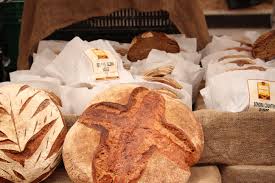
To process: the performing of a series of actions to change or preserve something. Michael Pollan’s documentary film series, Cooked , ends with the final episode on Earth, which describes the culinary act of fermentation. The penultimate episode dealt with Air, and mainly featured the baking of bread with an inspection of what process is involved with changing wheat kernels into flour. Previous episodes dealt with Fire and Water. To watch as food is changed from form to form, by the action of fire, or bacteria or yeast, or simply time, makes you aware of how far we have become separated from original methods of processing food. How we now substitute manufacturing processes in order to produce cheap packaged products that last a very long time on store shelves. We know we lose something for convenience, and for costs. What is that something? Maybe we hide something. Or substitute something for another. Is this a kind of game we play, a trick? A pretense? A loaf of genuin...

The Old Church

Image
The church that I belong to seems old. It has lost the ability to grow and it deteriorates with age. But it isn’t old just in the sense of losing its capacity to grow, in its energy; it is old in the sense that it imagines itself as old, and places itself at a time more than one hundred years ago, around the time of 1850 or so. That was the time when science never heard of natural selection. A time that was still pre-industrial and climate change was far into the future. It was a time when race was solidly understood by the majority of people as a great divide and a biological imperative. It was a time before the age of mass destruction from warfare and mass shootings. It was a time before even the term “homosexual” was known and used, and certainly not other terms such as “trans-sexual,” “queer,” “gay.” It was pre-dispensationalist, and so end times were not given so easily as an excuse for inaction. It was a time before the landmark collection, Essays and Reviews , was publish...

The Beautiful Book

Image
There is a sense in which you can take any sign whatsoever, whether a tree, a musical note, a word, and find ambiguity, find a space that resonates and echoes until you lose it completely and you wonder, What did that mean? There is also a sense in which you can take any sign and apply it almost exactly, precisely to a given situation. You have the sense that you know it completely. Signs are like this, like a jazz composition, that the composer has written down and gives to a few different bands to play. All the bands have the same musical notations, the signs, and they appears exactly the same on the page. Yet all the bands will play a different song, if only slightly different, playing within the ambiguous space of the composer’s signs. That is language. Everyone knows what it is; and no one knows what it is. Nietzsche apparently felt that truth is a “mobile army of metaphors, metonymies and anthropomorphisms...illusions whose illusory nature has been forgotten.” Umb...